
Turn an Ordinary Space into a Halloween Scavenger Hunt Adventure
A hallway becomes a haunted passage. The garden shed becomes a witch’s cottage. Somewhere beneath the stairs is a mysterious clue, while a glowing ghost at the bottom of the garden points towards the next part of the mystery. That’s the magic of a good Halloween scavenger hunt.
You don’t need an enormous garden, elaborate props or professional decorations. What makes a Halloween scavenger hunt exciting is anticipation. Every clue should make players wonder what they’ll discover next.
Better still, you can adapt scavenger hunts for almost anyone. Young children can search for colourful Halloween objects, families can solve clues together, teenagers can tackle riddles and codes, and adults can attempt a much more sophisticated mystery.
Here are several ways to create one.
Haunted House Hunt
Transform different parts of your home into clue stations.
You might hide a miniature skeleton in the hallway, a pumpkin in the kitchen, a witch’s hat behind the sofa and a toy spider somewhere unexpected.
Rather than telling players what they’re searching for, connect everything with clues.
For example:
“I’m black as night with eight long feet. Find where I hide beside somewhere you eat.”
The answer could lead to a spider hidden beneath the dining table.
Each discovery reveals the next clue until players eventually reach the treasure.
You can dramatically improve the atmosphere with cobwebs, battery candles and a Halloween soundtrack without turning the entire house into an expensive haunted attraction.
Outdoor Pumpkin Trail
If you have access to a safe garden, an outdoor pumpkin trail can be magical after dusk.
Place pumpkins along a route, with each one marking another stage of the adventure.
Real pumpkins look fantastic, although reusable artificial pumpkins are easier if you’re setting everything up several days in advance.
Put a clue underneath or behind each pumpkin.
Battery tea lights or small fairy lights can make each station glow.
For younger children, keep the Halloween scavenger hunt route relatively short and visible. Older players might enjoy figuring out which pumpkin to visit next.
Never place clues where children need to climb, enter dark sheds alone or venture near roads, ponds or other hazards.
Glow-Stick Ghost Halloween Scavenger Hunt
Here’s an excellent option for an evening Halloween scavenger hunt.
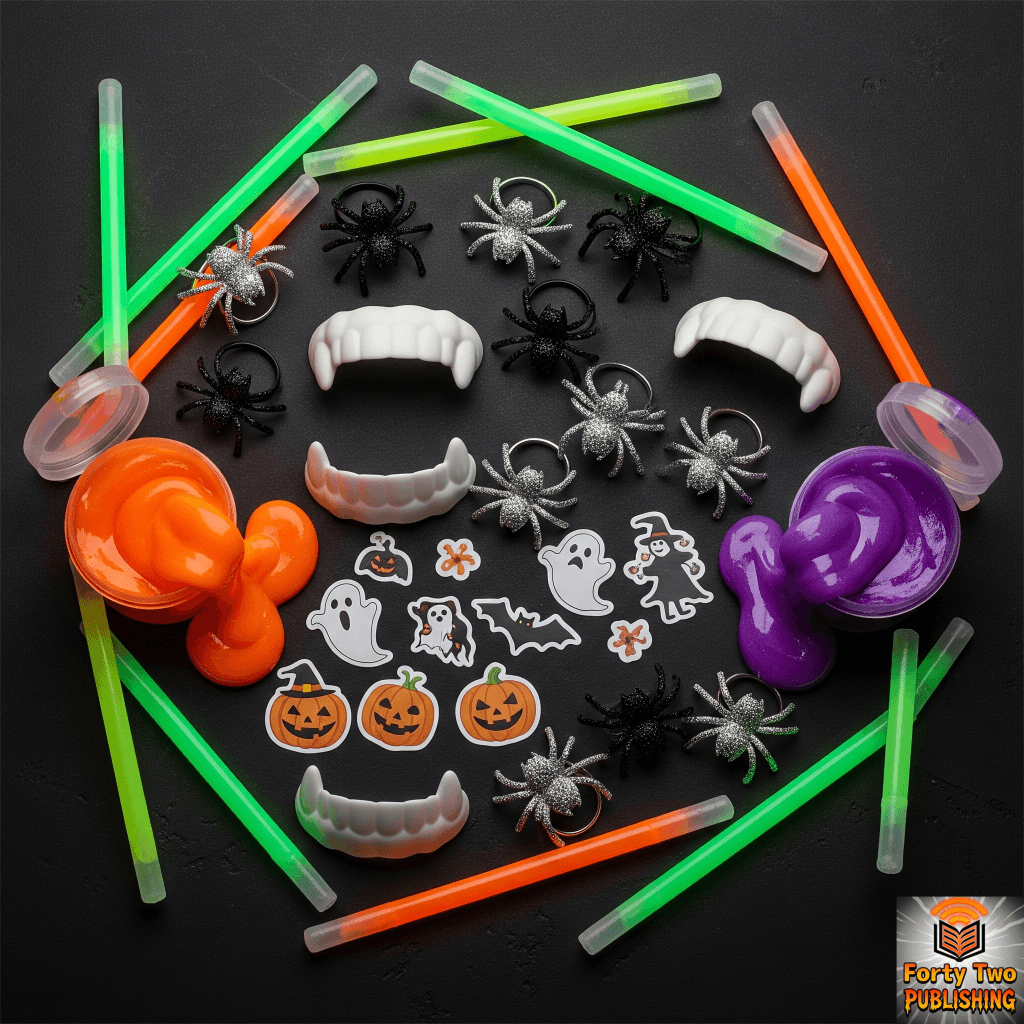
Turn glow sticks into little ghosts by covering them loosely with white tissue, fabric or lightweight paper and drawing faces on the outside.
Hide them around a safe garden or darkened indoor space.
Players then have a fixed amount of time to find the glowing ghosts.
You can assign different colours different point values. Perhaps green ghosts are worth one point, purple ghosts are worth three, and the single elusive red ghost is worth ten.
Alternatively, forget scoring and challenge the whole group to rescue every ghost before the timer reaches zero.
The Halloween Scavenger Hunt Candy Quest
This Halloween scavenger hunt combines traditional scavenger hunting with trick-or-treating.
Instead of receiving all their treats at once, players uncover small Halloween containers at different clue stations.
A miniature cauldron might contain wrapped sweets and the next clue. A pumpkin box might contain stickers. The final treasure chest could hold everyone’s party bag.
If you’d prefer not to centre the activity on sweets, fill the stations with small toys, puzzle pieces, stickers or components needed to solve the final mystery.
Match Your Clues to the Age Group
This can completely change the experience.
For preschool children, use photographs or pictures. Show them a photograph of the sofa, for example, and let them search around it for the next clue.
Early readers can tackle simple rhymes.
Older children might decipher backwards writing, number codes, riddles or invisible messages.
Teenagers and adults can handle interconnected clues where solving one puzzle provides information required later.
A simple scavenger hunt can therefore evolve into something approaching a miniature escape-room experience.
Create a Story Rather Than Just a Search
A story makes even basic clues much more exciting.
Imagine telling players:
“At midnight yesterday, the Halloween Witch discovered that someone had stolen her spell book. The thief left ten clues behind. Unless the book is returned before the clock strikes nine, every pumpkin in town will turn into a potato.”
It’s ridiculous.
That’s exactly why children will remember it.
Every clue now advances the story rather than merely directing them to another object.
You could build your hunt around a missing pumpkin, an escaped ghost, a lost witch’s cat, a stolen vampire cap, or a mysterious Halloween treasure.
Build Challenge Stations into the Trail
Not every clue has to be hidden.
Some can only be earned by completing a challenge or Halloween Party Game.
Players might have to perform their best zombie walk, throw three rings over a witch’s hat, answer a Halloween question, complete a mini jigsaw or find five hidden bats.
This stops the activity becoming a repetitive cycle of “read clue, find object, repeat”.
Add a Secret Code
Older children love discovering that clues aren’t quite what they seem.
Try simple substitution codes where symbols represent letters. Another option is writing a message backwards so players need a mirror to read it.
You could cut a clue into jigsaw pieces or write separate words on several paper bats that players must place in the correct order.
Another wonderfully simple trick is to write clues with a UV pen.
Players suddenly discover that an apparently blank piece of paper contains a secret message.
Make It Cooperative
A Halloween scavenger hunt doesn’t need a winner.
In fact, cooperation is often better for mixed-age groups.
Give everyone one shared mission and allow different people to contribute.
A younger child might spot the hidden pumpkin. An older sibling might solve the riddle. An adult might recognise a word puzzle.
Everyone reaches the treasure together.
That can make the activity much more enjoyable than having the fastest children race ahead while everyone else follows behind.
What Should Be at the End?
The finale of your Halloween scavenger hunt should feel like a reward for completing the adventure.
You might use a decorated cardboard treasure chest, large cauldron or Halloween box.
Fill it with a combination of small treats, Halloween stickers, puzzles, colouring sheets or party favours.
For adults, the treasure could reveal where the food, Halloween cocktails or next party activity is waiting.
You can also make the final discovery part of the story.
Perhaps players recover the witch’s spell book and discover that the final page contains a mysterious message:
“You thought the hunt was finished?”
That can lead directly into another party activity.
Turn the Halloween Scavenger Hunt into a Halloween Tradition
One of the best things about a Halloween scavenger hunt is that it can grow with your family.
A four-year-old who once followed picture clues around the living room might eventually be solving elaborate Halloween codes as a teenager.
Keep copies of particularly successful clues and themes. Change the hiding places, introduce harder puzzles and build a new story each year.
You don’t need expensive props to create that sense of adventure.
A mysterious envelope, dimmed lights, a few glowing decorations and the promise that something is waiting to be discovered can transform an ordinary October evening into something children talk about long after Halloween is over.
Missed a Newsletter? Check out the Newsletter Archive